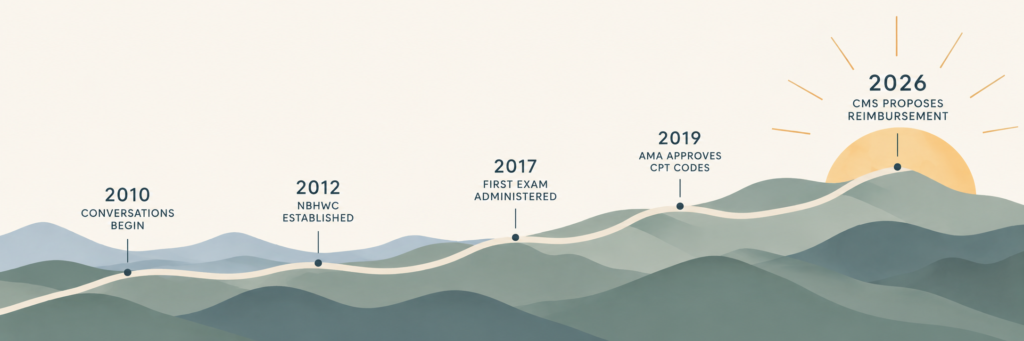
When the National Board for Health and Wellness Coaching launched its Program Approval and Continuing Education processes, it planted something the field didn’t yet have: a shared standard. What’s grown since then reflects not just organizational progress, but the maturation of an entire profession.
Building Standards Before There Was a Blueprint
Health and wellness coaching emerged from a diverse range of professional backgrounds, including nursing, fitness, nutrition, and counseling, resulting in significant variation in program depth, rigor, and scope. Without consistent standards, clients had limited means to evaluate the evidence base behind the coaching they received.
NBHWC’s Program Approval (PA) process addressed this directly. By establishing criteria that training programs must meet, grounded in behavior change science, motivational interviewing, and coaching competencies, it created a floor, a minimum threshold of quality that gave both practitioners and the public something to trust.
Shared standards are what transform individual practitioners into a profession.
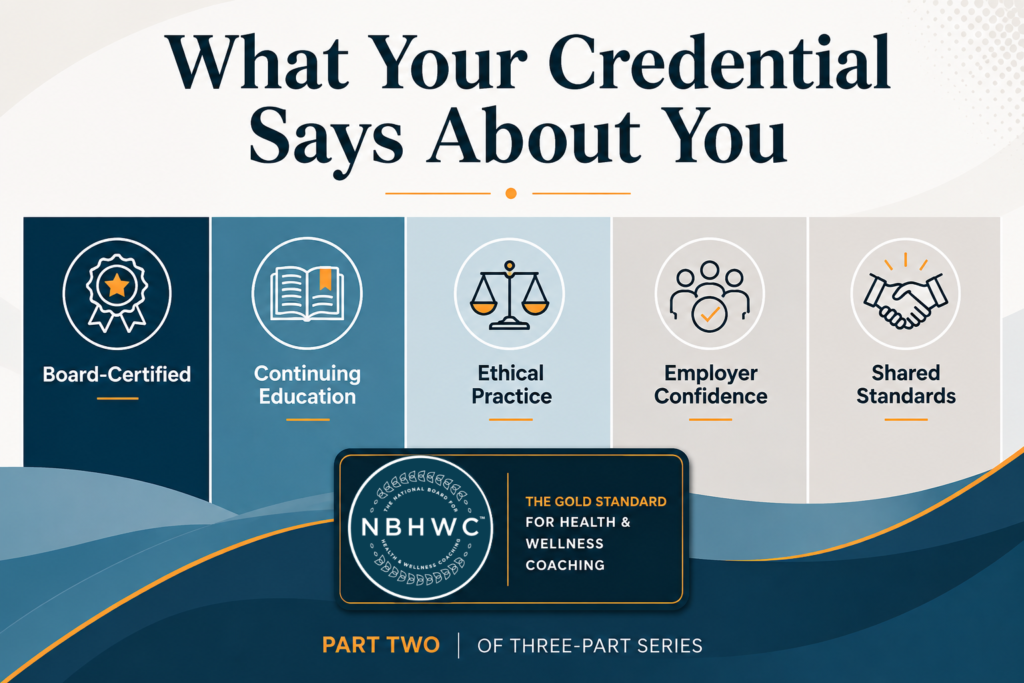
What Approval Actually Signals
For prospective coaches, an NBHWC-approved program signals that the training they’re investing in has been reviewed against established criteria, not just for content, but for how learning is structured and assessed. For academia, private employers, and healthcare systems beginning to integrate coaches into care teams, it offers a meaningful filter. And for the public, it’s part of a longer arc toward accountability.
Continuing Education as a Commitment to Growth
Credentialing doesn’t end at certification. That’s the premise behind NBHWC’s Continuing Education (CE) pathway.
The CE process requires board-certified coaches to engage in ongoing learning, return to the evidence base, develop new skills, and stay current as the science of behavior change, lifestyle medicine, and integrative health continues to evolve. Coaches who pursue continuing education aren’t just maintaining a credential; they’re owning their growth and deepening their mastery
Healthcare has long understood this; physicians, nurses, and allied health professionals maintain licensure through continuing education because the knowledge base doesn’t stand still. By building this same expectation into the coaching credential, NBHWC positions health and wellness coaches within that tradition of professional accountability.
The Expanding CE Landscape
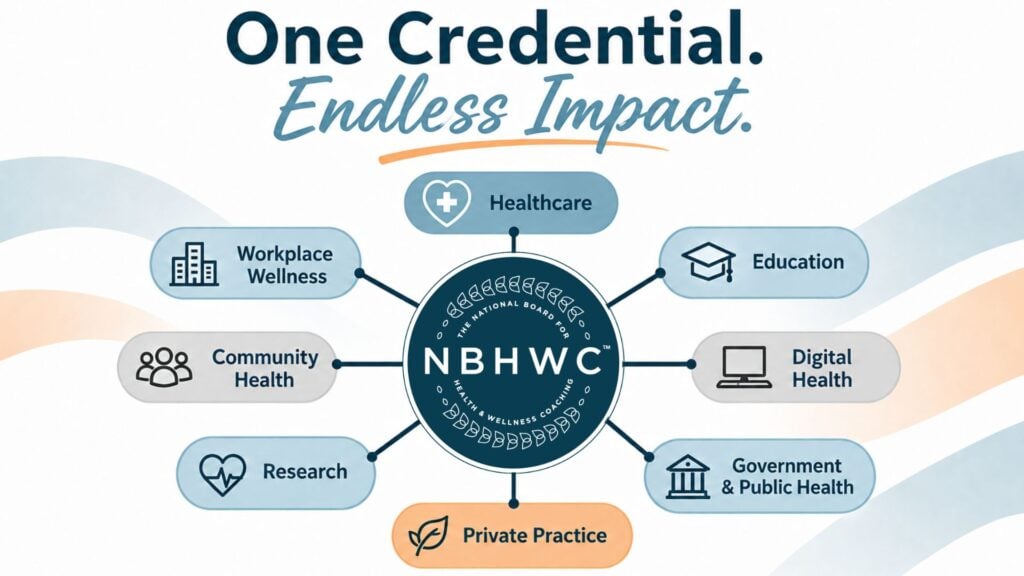
What’s notable about the CE pathway’s growth is not just its scale, but its range. Approved CE offerings now span clinical integration, health behavior theory, cultural humility, motivational interviewing, lifestyle medicine, coaching around suicidality, and more. That breadth reflects how coaches are actually working, inside hospital systems, corporate wellness programs, private practice, academia, and community health settings. The CE infrastructure has grown with the profession’s reach.
What This Growth Represents
Stepping back, the evolution of the PA and CE pathways represents something larger than process improvement. It represents a maturing profession learning to hold itself accountable.
As with many emerging fields, the temptation is to grow fast and sort out standards later. NBHWC took a different approach, investing in infrastructure before the field reached scale. The result is a credential that carries weight, a training ecosystem with coherent expectations, and a growing body of coaches who have consistently demonstrated their preparation in a reviewable way.
For those who’ve been part of this work from the beginning, the distance traveled is significant. For those entering the field now, the infrastructure may feel as if it has always been there. That’s often the mark of something built well.