Introduction
As health and wellness coaching continues to grow, so does interest in the NBC-HWC credential. Along with that growth comes questions about what board certification means, how it supports professional development, and the role it plays across healthcare, corporate wellness, community health, and private practice settings.
Many of these questions don’t have simple yes-or-no answers. Instead, they open the door to important conversations about the profession, credentialing, and the future of health and wellness coaching.
Here are four of the most common questions I hear.
Question #1: Is the NBC-HWC Valuable for Coaches in Private Practice?
As the field of health and wellness coaching continues to grow, I believe the NBC-HWC provides significant value. It establishes a nationally recognized standard for coaching competencies, ethical practice, continuing education, and scope of practice. Those standards help strengthen not only individual coaches, but the profession as a whole.
Of course, there are successful health coaches who have built thriving private practices without board certification. Coaching is still a relationship-driven profession. Clients often choose a coach because they connect with them, trust their expertise, receive a referral, or feel confident the coach can help them achieve their goals.
Whether board certification is necessary for private practice is ultimately a personal decision. However, reducing it to a marketing tool or business credential often overlooks the broader professional foundation it was designed to support.
I also think we’re sometimes asking the wrong question.
Rather than asking whether board certification is required to build a private practice, I think it’s more valuable to ask what the credential represents. To me, the value has never been simply having letters after my name. It’s about committing to a shared set of professional standards that help define who we are as health and wellness coaches.
Question #2: Do Employers Value the NBC-HWC Credential?
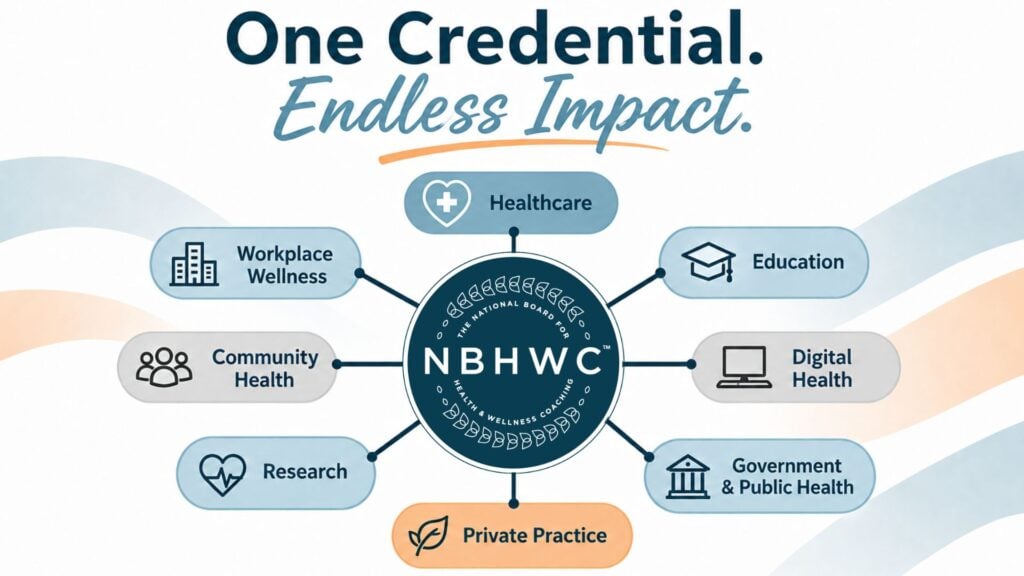
As health and wellness coaching continues to expand across healthcare systems, corporate wellness programs, community health initiatives, and private practice settings, employers are increasingly looking for ways to evaluate coaching qualifications and professional competencies.
The NBC-HWC has become one of the most recognized credentials within the profession and has appeared with increasing frequency in job postings, where it may be listed as preferred or, in some cases, required. For employers, the credential provides confidence that a coach has demonstrated nationally recognized coaching competencies, ethical practice, and professional standards.
Of course, board certification is only one part of what makes someone an effective coach. Experience, communication skills, professionalism, critical thinking, and the ability to build meaningful relationships with clients all contribute to successful coaching outcomes.
Perhaps the more helpful question isn’t whether employment is possible without the NBC-HWC. It certainly is. Rather, it’s understanding why employers value the credential in the first place.
Health coaches come from a wide range of educational backgrounds, training programs, and professional experiences. For employers, the NBC-HWC provides a consistent benchmark that reflects a shared set of coaching competencies, ethical standards, and a commitment to ongoing professional development. As the profession continues to mature, that consistency helps employers better understand the qualifications of the coaches they are hiring.
Question #3: Does the NBC-HWC Allow Coaches to Bill Insurance?
As health coaching continues to gain recognition across healthcare and wellness settings, one of the most common questions is whether board certification allows a coach to bill insurance.
The short answer is no. At this time, earning the NBC-HWC credential alone does not allow you to bill insurance.
The question is understandable. In many professions, certification, licensure, and reimbursement are closely connected. It’s easy to assume that earning a nationally recognized credential automatically creates a pathway to insurance reimbursement.
The reality is more complex. Reimbursement decisions involve healthcare policy, payer requirements, coding structures, provider recognition, and regulatory considerations. While health coaching continues to gain visibility within healthcare, reimbursement pathways remain part of a larger conversation that extends beyond any single credential.
That said, professional standards matter. As healthcare organizations, employers, policymakers, and other stakeholders evaluate the role of health coaching, nationally recognized standards help establish consistency, accountability, and credibility within the profession.
The NBC-HWC credential plays an important role in that foundation. It represents established coaching competencies, professional standards, ethical practice, and ongoing professional development. While board certification should not be viewed as a direct pathway to reimbursement, it does contribute to the broader professional framework that supports the continued growth and recognition of health and wellness coaching.
Progress is happening, and important conversations continue across the profession. The NBC-HWC is one piece of that larger effort to advance the visibility, credibility, and recognition of health and wellness coaching.
Question #4: How Is the NBC-HWC Different From Other Credentials?
The answer starts with understanding what the credential represents.
The NBC-HWC is an independent national board certification specifically for health and wellness coaching. Developed in collaboration with the National Board of Medical Examiners (NBME), the credential establishes national standards for the profession and provides a consistent benchmark for coaching competencies, ethical practice, and professional preparation.
To become board certified, candidates must meet established eligibility requirements, complete approved education pathways, demonstrate coaching experience, and pass a national board certification examination. Once certified, NBC-HWCs maintain their credential through continuing education and ongoing professional development.
The credential is also grounded in a Code of Ethics and a clearly defined scope of practice, helping support consistency, accountability, and professionalism across the field.
This doesn’t mean there aren’t other valuable educational programs, certifications, and professional development opportunities available to coaches. In fact, many NBC-HWCs pursue additional training and specialization throughout their careers.
Rather than asking which credential is “best,” I often encourage coaches to ask a different question: What does this credential represent?
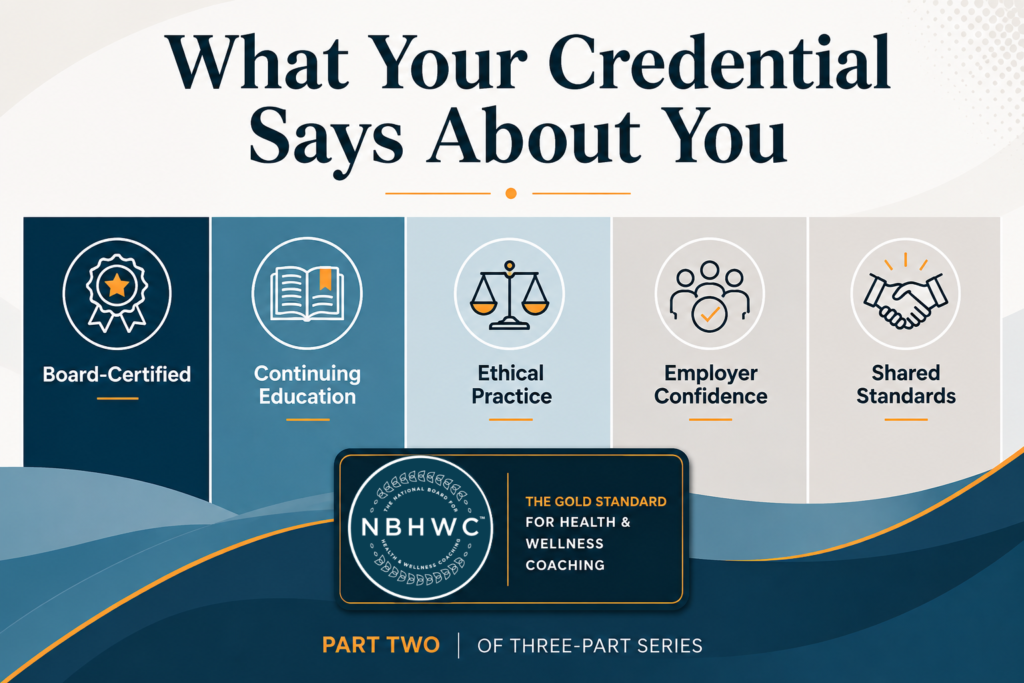
For the NBC-HWC, the answer is a commitment to nationally recognized standards, demonstrated coaching competency, ethical practice, and lifelong professional growth. As employers, healthcare organizations, training programs, and consumers continue to seek ways to identify qualified health and wellness coaches, those standards help provide clarity and confidence in a growing profession.
Conclusion
As health and wellness coaching continues to evolve, so do the conversations surrounding board certification. Questions about private practice, employment opportunities, insurance reimbursement, and credentialing pathways are natural as both coaches and employers seek greater clarity about the profession.
While the NBC-HWC does not guarantee career success, employment, or reimbursement, it was never intended to be a shortcut. Rather, it represents something equally important: a commitment to nationally recognized standards, demonstrated coaching competency, ethical practice, and ongoing professional development.
For some coaches, the credential may open doors. For others, it may strengthen confidence, credibility, or professional identity. Regardless of where a coach chooses to practice, the NBC-HWC provides a foundation that supports the continued growth, recognition, and advancement of health and wellness coaching as a profession.
In Part 2, we’ll explore additional questions about career paths, professional growth, and what it means to build a successful and sustainable career as an NBC-HWC.