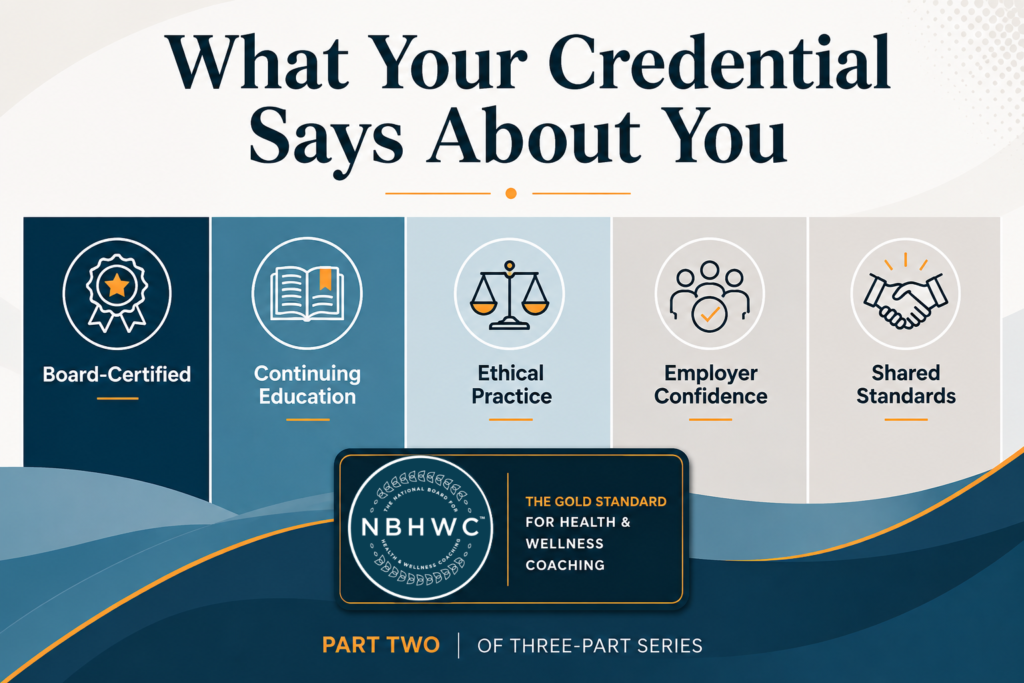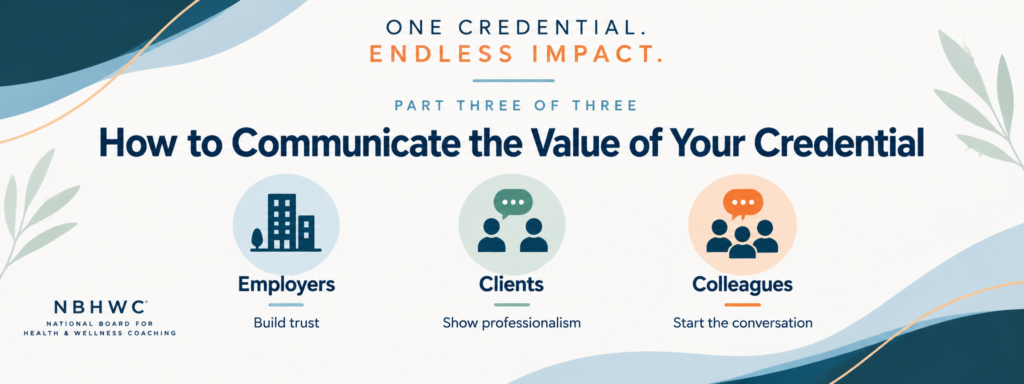
In Part One of this series, we explored the many settings where Board Certified Health & Wellness Coaches (NBC-HWCs) are making an impact. From healthcare systems and corporate wellness to community organizations, Part One focused on where NBC-HWCs can make an impact, highlighting the breadth of professional settings where coaching skills can be applied. Part Two explored what the NBC-HWC credential represents and the professionalism, trust, and shared commitment behind board certification. Understanding the value of the credential matters, but communicating that value clearly helps others understand why the credential matters and how health and wellness coaching can support meaningful change in their lives. Part Three brings those ideas together by asking the next question: How can NBC-HWCs communicate that value to others?
Advocacy Starts with Everyday Conversations
Advocacy does not have to mean delivering a formal presentation, leading a campaign, or becoming a spokesperson for the profession. More often, it happens in everyday moments: a job interview, a networking conversation, a discussion with a prospective client, a meeting with a healthcare professional, or even a casual exchange with someone who has never heard of an NBC-HWC.
These conversations matter because awareness often begins with simple, clear explanations. When NBC-HWCs can describe what their credential represents and how health and wellness coaching supports meaningful behavior change, they help others better understand both the profession and the value of working with a qualified coach.
Building Strong Referral Relationships
Those same conversations can also lead to valuable referral relationships. When a client’s or patient’s needs extend beyond the NBC-HWC scope of practice, a trusted network of professionals makes it easier to connect them with the right support.
Building relationships with professionals such as physicians, registered dietitian nutritionists, qualified fitness professionals, licensed mental health providers, and other specialists can strengthen a coach’s referral network while helping clients receive care that is appropriate to their needs.
Referral relationships can work in both directions. As other professionals gain a clearer understanding of the role of health and wellness coaching and the NBC-HWC credential, they may also become more confident referring individuals to a board certified coach when coaching is an appropriate next step.
One Credential. Many Opportunities.
The value of the NBC-HWC credential remains consistent, but the way that value is understood may differ depending on the audience. Effective communication begins with considering what the other person needs to understand and why the credential matters to them.
- Clients and prospective clients: They look for reassurance that they are working with a qualified professional who has demonstrated coaching competency and is committed to professional, ethical practice. The conversation can focus on trust, fit, and how health and wellness coaching can support them.
- Employers: Most interested in the credential as a recognizable benchmark when evaluating coaching professionals. The NBC-HWC designation can help communicate that a candidate has completed required education, demonstrated competency through examination, and maintains ongoing professional responsibilities.
- Healthcare professionals and referral partners: May want to better understand the role of health and wellness coaching, how it complements other health services, and when an NBC-HWC may be an appropriate referral option. Clear communication can also help strengthen collaboration and build referral relationships.
- Organizations and workplace wellness leaders: These audiences are often considering both employee impact and organizational return on investment. The conversation can focus on how health and wellness coaching may support employee well-being, engagement, sustainable behavior change, and a healthier workplace culture, while also helping organizations see the broader value of investing in qualified coaching professionals.
- Colleagues and professional networks: These conversations can help increase awareness of the credential, clarify the role of health and wellness coaching, and create opportunities for collaboration, referrals, and professional connection.
One helpful point to use across many of these conversations is the distinction between the title health and wellness coach and the NBC-HWC designation. Because the term health and wellness coach is not regulated, individuals may use that title without meeting a single nationally recognized standard. Not everyone, however, can call themselves a National Board Certified Health & Wellness Coach. The NBC-HWC designation reflects that the coach has met established eligibility requirements and demonstrated competency through board certification.
The credential doesn’t change from one conversation to the next, but the audience’s priorities do. Meeting each audience where they are can make the message more relevant, easier to understand, and more meaningful.
Use the Right Resource for the Conversation
NBC-HWCs do not have to explain the profession from the beginning in every conversation. NBHWC’s advocacy resources are designed to provide clear, consistent information that coaches can use to support conversations with different audiences.
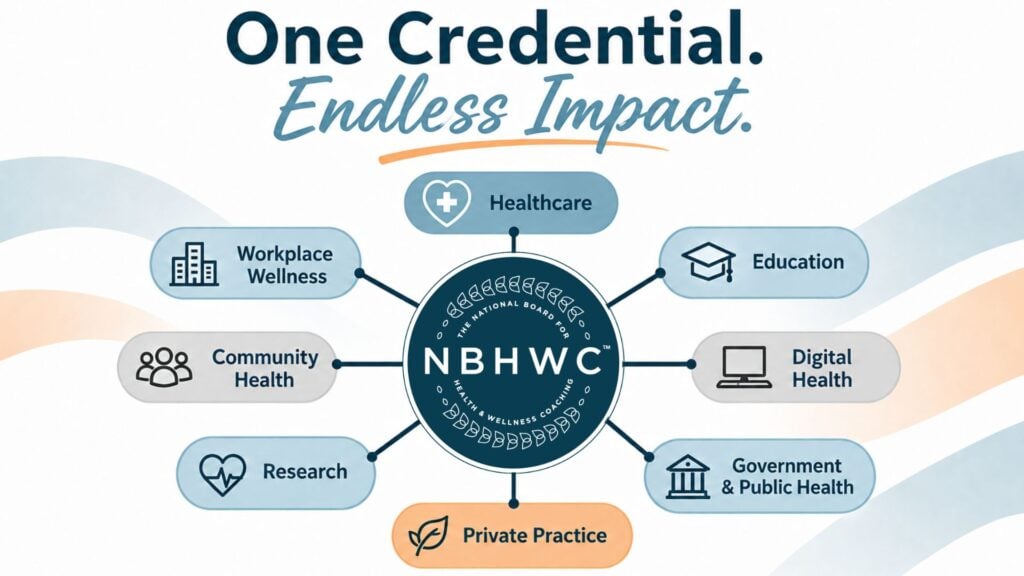
The One Credential. Endless Impact. roadmap can help demonstrate the breadth of settings where NBC-HWCs contribute and may be particularly useful when discussing career opportunities, organizational roles, or the versatility of health and wellness coaching.
The Why Certification Matters resource offers a concise way to explain the difference between completing coach training and earning board certification, including competency verification and continued professional development.
Employer-focused resources can support conversations with organizations that want to better understand why the NBC-HWC credential can serve as a trusted benchmark when hiring coaching professionals. The Health Coach vs. NBC-HWC resource can also help audiences unfamiliar with the profession better understand the distinctions in training, competency verification, continuing education, and professional expectations.
These resources are not meant to replace the conversation. They can help make those conversations easier to begin, clearer to understand, and more consistent across the profession. If you are a current NBC-HWC, you can access these resources 24/7 in your NBC-HWC profile.
Communicate With Confidence
Confidence does not require having the perfect response prepared for every situation. It begins with understanding what the NBC-HWC credential represents, recognizing the value of health and wellness coaching, and connecting both to the needs of the person on the other side of the conversation.
Every interaction is an opportunity to increase awareness. A conversation with an employer can build understanding of the credential during the hiring process. A discussion with another healthcare or wellness professional can lead to collaboration or a new referral relationship. A conversation with a prospective client can help someone recognize how coaching may support meaningful change in their life.
Over time, these individual moments can have a collective impact. When NBC-HWCs communicate consistently and confidently about the credential and the role of health and wellness coaching, they help strengthen recognition of the profession while creating new opportunities for coaches, clients, organizations, and communities.
Key Takeaways / Closing
Across the One Credential. Endless Impact. series, the journey has moved from understanding where NBC-HWCs can make an impact, to recognizing what the credential represents, and finally to learning how to communicate that value to others. Advocacy does not have to begin with a large platform; it can begin with one clear, informed conversation. By sharing the value of board certification, using available advocacy resources, and helping others better understand the role of health and wellness coaching, every NBC-HWC can contribute to greater awareness of the credential and the profession’s continued growth.