The Academic Consortium for Integrative Medicine & Health’s 2026 International Congress on Integrative Medicine & Health, held April 20–23 in Salt Lake City, brought together global leaders across clinical care, research, education, and policy. Anchored by the theme “Revolutionizing Health Care: Measuring What Matters, Scaling What Works,” this year’s Congress made one thing increasingly clear: health and wellness coaching is becoming central to how whole-person health is delivered.
Health and Wellness Coaching As a Bridge
Across multiple sessions, health and wellness coaching was consistently positioned not as an add-on, but as a core delivery mechanism for integrative care. It was described as a bridge between disciplines, a connector across fragmented systems, and a scalable solution for behavior change, particularly in chronic disease management and whole-person care. Health and wellness coaching also held several poster sessions, demonstrating its value to attendees and the research being conducted.
Talks with a Key Focus on Health and Wellness Coaching
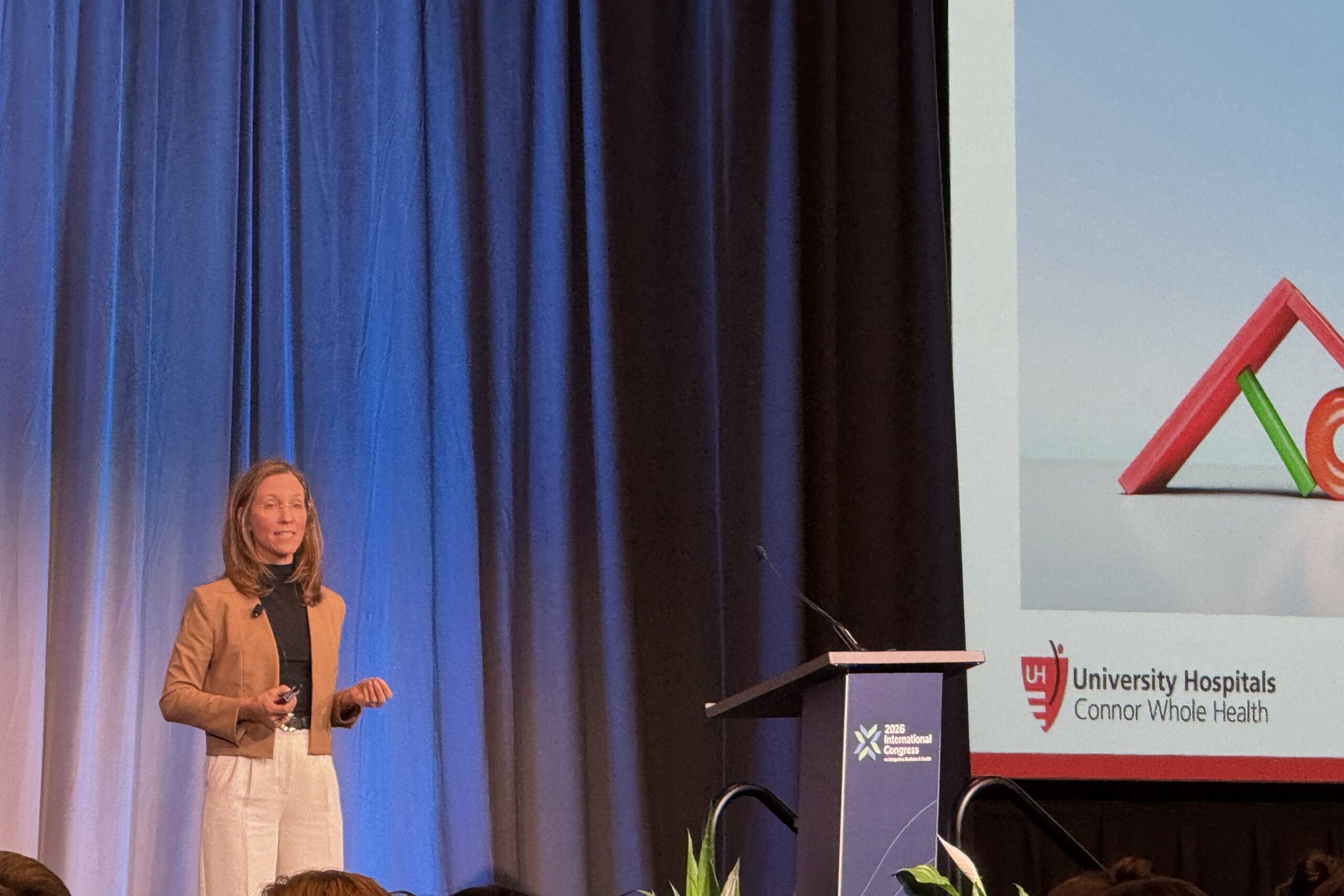
A plenary session, “Shaping the Future of Care: Leveraging Lifestyle Medicine to Advance Whole Health,” led by Dr.Kristi Artz, explored how lifestyle medicine can be operationalized within healthcare systems to support whole-person care.
Health and wellness coaching emerged as a central, high-value model for implementation, alongside group visits and other team-based approaches. The takeaway was clear: without structured support for sustained behavior change, even the most evidence-based care models struggle to achieve meaningful outcomes, reinforcing the essential role of coaching in advancing whole health.
Speaker Perspective: Kristi Artz
Dr. Artz shared that the goal of the session was to “explore the alignment of Lifestyle Medicine and Whole Health and the powerful role their collaboration can play in advancing health system transformation.”
Reflecting on the broader impact of the Congress, she noted that “ICIHM drives evidence-based growth in the field, positioning this conference as a cornerstone for advancing Whole Health.”
A session led by researchers from the University of Vermont, University of Utah, University of Missouri, and the Institute for Behavior Change offered a current, evidence-based perspective on health coaching in clinical care.
Drawing on a white paper, scoping review, and a Delphi study, the presentation highlighted a growing body of research aimed at strengthening the definition, implementation, and evaluation of health coaching within healthcare systems. The work reflects a broader opportunity to bring greater clarity to the role of health and wellness coaching, supporting more consistent integration, stronger collaboration within care teams, and clearer demonstration of impact.
A panel titled ‘Bridging the Gap: Integrating Health Coaches and Mental Health Practitioners for Enhanced Patient Outcomes’ featuring Dr.Cherie O’Neill, Dr.Megan Voss, and Dr.Lidia Zylowska of the University of Minnesota explored the integration of health coaches into mental health care, particularly in supporting patients with ADHD, anxiety, and depression. Their work and talk explored how integrating health coaches into mental health care settings can revolutionize treatment outcomes through collaborative, whole-person care.
The discussion highlighted a powerful opportunity: pairing health coaches with mental health practitioners to improve patient engagement, adherence, and long-term outcomes. The panelists shared strategies for implementing or enhancing health and wellness coaching programs within mental health practice settings, including opportunities for role clarification, communication protocols, and specific training for coaches and mental health practitioners.
This also marked a milestone moment, as Cherie O’Neill, an NBHWC Ambassador, presented at the conference.
Presence and Engagement on the Exhibit Floor
Engagement at the exhibit booth reflected a growing recognition of health and wellness coaching, and a strong interest in the profession. Attendees ranged from individuals exploring a path into the profession, to organization representatives seeking to integrate coaching into care delivery, to practicing coaches looking to deepen their impact.
There was a clear sense of appreciation that NBHWC, as the national standard-setting body, had a visible presence at the Congress. Many attendees actively sought out conversation, signaling both growing awareness and a desire for continued connection, education, and collaboration within the field.
Closing: Key Takeaways
The Road Ahead
The 2026 Congress underscored that the field of health and wellness coaching has matured significantly, with growing evidence, established standards, and increasing integration into healthcare systems.
What’s clear is that health coaching is an essential infrastructure for delivering whole-person care at scale. The next chapter requires alignment across research, practice, and policy, and ensuring that high-quality, credentialed coaching is accessible, standardized, and integrated across care settings.