5 Takeaways From Serving on the Standard Setting Committee
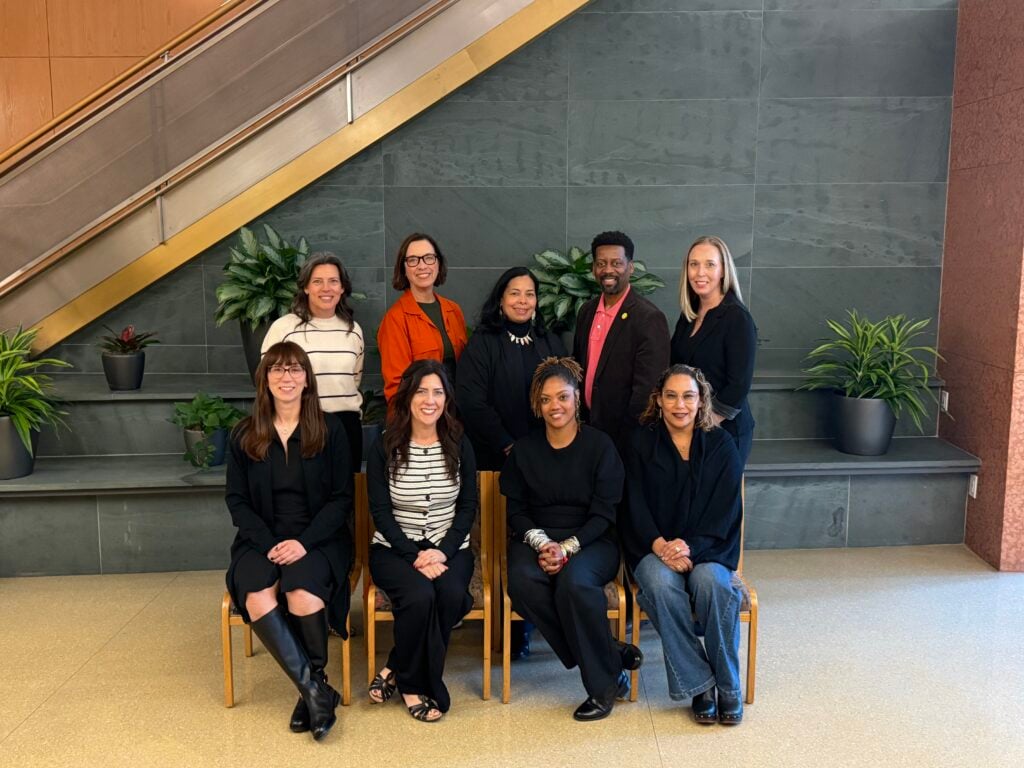
In March 2026, I had the honor of joining nine other National Board Certified Health and Wellness Coaches to serve on the Standard Setting Committee for the NBHWC Board Exam.
I wasn’t completely sure what the day-long activity would entail. But knowing the level of care, review, and professional oversight that goes into becoming a board-certified health and wellness coach, I was grateful for the opportunity to be part of the process.
Our meeting was held at the National Board of Medical Examiners headquarters, which partners with the National Board for Health and Wellness Coaching to create and manage the Health & Wellness Coach Certifying Exam. NBME describes this exam as measuring the “foundational knowledge, skills, tasks, and abilities essential to the practice of health and wellness coaching.”
The NBC-HWC credential is part of a national certification pathway that includes completing an NBHWC-approved training program, documenting 50 health and wellness coaching sessions, meeting an education or work-experience requirement, and passing the national board exam.
And before a training program can be considered NBHWC-approved, it must meet defined standards, including a minimum of 75 instructional hours covering the competencies outlined in the Health & Wellness Coach Certifying Examination Content Outline.
All that to say, the amount of analysis, oversight, expertise, scrutiny, and review that goes into creating, delivering, and upholding standards for the NBHWC Board Exam is extensive. As coaches, we can proudly state that the effort to become board-certified health and wellness coaches is truly a professional milestone.
And after being part of this process, I can honestly say I have a deeper appreciation for it.
I connect with hundreds of health and wellness coaches every month, and one thing we almost always have in common is a strong value for lifelong learning. Which also means that, over the course of a coaching career, most of us will likely move through many classes, trainings, certifications, continuing education programs, and professional development opportunities.
Many of those programs may include evaluations or exams of their own.
But as I sat through the standard-setting process, I found myself reflecting on what makes the NBHWC Board Exam different from many other training-based assessments or certificates.
Here are five things I took away from the experience of participating in this committee and standard-setting meeting:
The NBHWC Board Exam process is guided by deep care for the profession
As I sat in the committee meeting, I listened to other passionate leaders in the health and wellness coaching space talk about our responsibility to uphold the standards associated with national board certification.
The entire committee did not agree on every single point throughout the day, and that was actually one of the things I appreciated most.
There was a thoughtful discussion. There was careful consideration. There was professional judgment. We held a shared understanding that when a coach holds the NBC-HWC credential, it signifies something important not only for that individual coach but also for clients, healthcare partners, organizations, and the broader coaching profession.
The pride and strong sense of professional responsibility in the room were evident throughout the day.
It was clear that, as professionals involved in this process, we were thinking beyond the exam itself and to what it means to protect the credibility, integrity, and future of the field as a whole.
National Board Certification reflects more than program completion
One of the strongest confirmations for me was that the NBC-HWC credential represents more than completing a training program.
Training is an essential part of the pathway, but national board certification adds another layer.
To qualify for the NBHWC Board Exam, coaches must complete an NBHWC-approved training program, pass a practical skills assessment, complete qualifying coaching practice sessions, and meet an education or work-experience requirement.
These qualifications required to apply for the exam demonstrate coaching comprehension beyond testing alone, but in application as well.
That means that when clients see the NBC-HWC letter behind a coach’s name or the NBHWC badge on a coach’s website, they can fully trust that the coach has met strict standards essential to a client’s or patient’s long-term wellbeing and safety.
Healthcare organizations and practitioners can hire coaches and refer patients to coaches in private practice, knowing that NBC-HWCs have committed to the highest level of ethics and scope of practice.
In other words, it’s one of the highest symbols of professional trust and integrity a health and wellness coach can hold today, backed by national standards for training, practice experience, ethics, scope of practice, and relevant competencies.
The passing standard is set with care and intention
Not everyone who sits for the NBHWC Board Exam will pass.
And while that can feel uncomfortable to say, it is also part of what gives the credential meaning.
The standard-setting process is designed to determine the level of knowledge and professional readiness expected of a coach seeking national board certification.
That is the part I found especially meaningful.
This was not a quick conversation about whether an exam should be “easy” or “hard.” Instead, we participated in a structured process that focused on identifying what a board-certified coach should know and be able to apply upon passing the exam.
A national board credential provides a level of consistency and standard across coaches who may have trained in different programs, practiced in different settings, and entered the field through different professional pathways.
No matter what training program, experience, or background the coach may have, board certification signals a professional standard that no other coaching certification in the profession matches.
Current and real-world coaching competencies matter
It has been almost 10 years since I sat for the national board exam myself, so I was especially interested in how the exam continues to reflect the current work of health and wellness coaches.
The exam questions are based on the NBHWC Content Outline, which defines the core competencies, knowledge, and coaching skills, and was updated in 2025 to maintain current standards for coaches.
During the committee process, I was glad to see conversations that reflected the realities of coaching as it is practiced today, including the importance of ethical practice, appropriate scope, professional judgment, and the evolving ways coaches navigate modern tools, technology, and digital practice environments.
As the profession grows, the standards associated with it must remain current and relevant to real-world applications and the environments in which coaches practice.
The standard strengthens the future of health and wellness coaching
As we wrapped up a full day of discussion, I left with much more than a better understanding of the exam process.
I left with a renewed sense of gratitude for the people who are working behind the scenes to protect and uphold the quality, standards, and reputation of the NBC-HWC credential.
Last week alone, I reviewed several job postings for health and wellness coaching positions, each requiring coaches to be nationally board-certified. Seeing the credential across job descriptions demonstrates the importance of the standard it represents for those organizations.
And it makes sense. Hiring an NBC-HWC not only sets a standard for the quality of care the organization represents and maintains, but also for the standard of care they are willing to invest in for the future of their clients’ and patients’ success, as well as their own.
Health and wellness coaching is still a growing profession. As more coaches move into private practice, healthcare organizations, corporate wellness, and integrative care settings, the need for shared professional standards among health and wellness coaches becomes even more important.
But it’s also important to note that board certification doesn’t mean a coach knows everything.
It doesn’t mean a coach will never need mentorship, continuing education, feedback, or support.
In fact, I would argue the opposite.
As in many other client- and patient-facing professions, dedication to ongoing exploration, practice, and improvement is essential for professional development toward mastery.
But the NBC-HWC credential does create a shared foundation. It gives clients and other healthcare providers a clearer way to recognize coaches who have met national standards for training, practice experience, ethics, scope, and professional knowledge.
And that matters for the future of this profession and the level of care being provided across healthcare as a whole.
Closing: Key Takeaways
Serving on the Standard Setting Committee gave me a deeper appreciation for the care and diligence that go into maintaining the quality and credibility of the Health & Wellness Coach Certifying Exam.
But even more than that, it reconfirmed for me that the standard and integrity of this credential are backed by industry leaders, professionals, and organizations that also understand how the coaching profession can only grow when the highest levels of integrity and trust are upheld.
As coaches and healthcare professionals, knowing there is a clear national standard for board certification gives us something meaningful to stand behind.
It helps us communicate the value of this credential with greater confidence. It helps clients, referral partners, and healthcare organizations better understand what the NBC-HWC represents. And it reminds us that, beyond the individual achievement represented by each board-certified coach, this credential also supports the quality and consistency of client and patient care, an essential foundation for the future success and credibility of the health and wellness coaching profession.
And ultimately, I left that room feeling even more proud to be an NBC-HWC than ever before.
https://www.nbme.org/examinees/other-assessments/health-wellness-coach-certifying-exam https://pmc.ncbi.nlm.nih.gov/articles/PMC12179476/