As AI (artificial intelligence) continues to reshape almost every industry, the overarching message at the 2026 NYU Coaching & Technology Summit resonated powerfully: the future of coaching is not about choosing between technology and human connection, but rather about thoughtfully integrating both.
The NYU Coaching & Technology Summit brings together leaders from coaching, healthcare, organizational development, academia, and technology for a two-day exploration into how AI is influencing the coaching profession, workplace culture, and the future of human development. While many perspectives were present at the summit, several consistent themes emerged. Additionally, the stronger emphasis and platform for Health & Wellness Coaching specifically highlighted the growing impact of the profession across a wide range of practice settings and industries.
AI Should Enhance Human Connection, Not Replace It
One of the themes that continued to appear throughout the conversations was that technology is beneficial for reducing administrative and cognitive burden, therefore allowing people to spend more time doing what humans do best – connecting with one another. However, it is the responsibility of each individual to ensure that they do not give all of their cognitive load to technology, but rather learn to work alongside it.
Speakers described AI as most valuable when it operates in the background, performing tasks such as organizing information, supporting preparation, surfacing insights, and automating processes. This allows coaches to remain more fully present with their clients.
Several speakers made note that while AI can improve efficiency, the burden of adoption has actually intensified work for many. Learning new tools, navigating ever-changing information and information overload, and adapting to new workflows have created what some call ‘AI Fatigue’. This is actually a unique opportunity for coaches, as they may need to help clients navigate not only behavior change but also change related to AI.
Coaching Remains Fundamentally Human
While AI continues to evolve rapidly, there was consensus across the panels that the core elements of professional and Health & Wellness coaching remain uniquely human. Trust, empathy, deep listening, ethical judgment, discernment, presence, accountability: all aspects of the human coach-client relationship that cannot simply be automated.
One comment from the credentialing panel captured this distinction particularly well:
AI coaching is transactional. Human coaching is transformational.
To build on that, at least one speaker acknowledged that transactional AI interactions may serve as an entry point that ultimately leads individuals toward deeper coaching relationships with human coaches.
Research shared during the summit suggested that clients often appreciate AI tools between coaching sessions for reminders, reflection prompts, and accountability while coaches themselves remain more cautious about introducing AI into the coaching relationship.
Technology Raises the Need for Greater Professional Clarity
Another important conversation emerged throughout the summit: “What exactly is coaching?”
Several speakers observed that the term “coaching” is being used more broadly than ever before, making professional clarity increasingly important. Coaching continues to evolve across numerous contexts, including leadership, executive development, health and wellness, education, and organizational consulting. This expansion creates both opportunity and responsibility.
Credentialing and competency-based education play a critical role in defining professional coaching, establishing standards of practice, and distinguishing evidence-informed coaching from technologies or services that simply adopt the coaching label.
The summit reinforced the importance of maintaining clear ethical boundaries, understanding scope of practice, and ensuring that coaches receive high-quality education grounded in established competencies.
Whole-Person Coaching in an AI-Enabled World
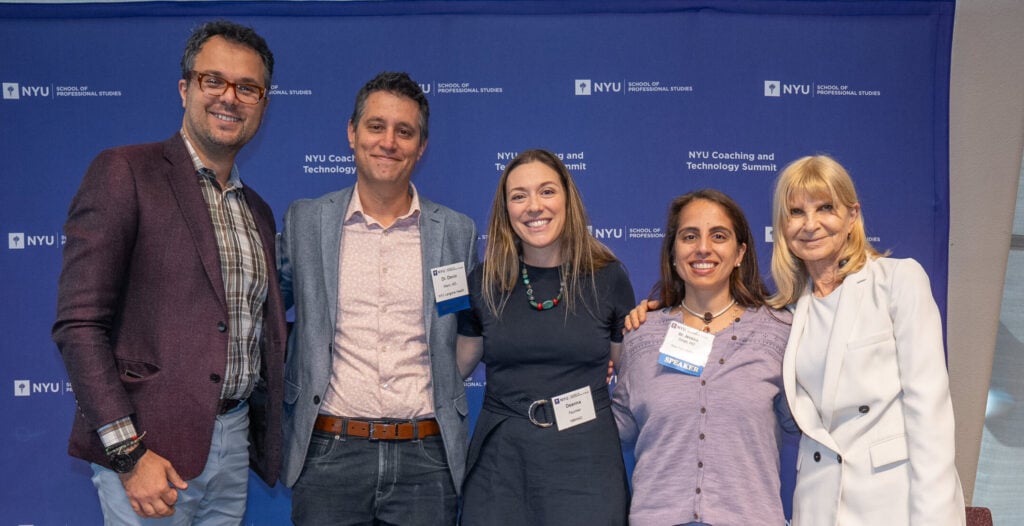
During a panel discussion on coaching, technology, and organizational transformation, NBHWC’s Executive Director, Deanna Fournier, shared perspectives on the unique contribution of health and wellness coaching in today’s rapidly evolving landscape. The panel, moderated by Moain Abu Dabrh, M.B., B.Ch., M.S., explored how organizations can better integrate health, wellbeing, and human performance while leveraging technology responsibly. Some of the key comments included:
- Whole-person coaching recognizes that health, wellbeing, and performance are interconnected, not separate organizational priorities
- Sustainable behavior change occurs when organizations move beyond fragmented wellbeing initiatives and instead create integrated systems that support the whole person
- As coaching scales through technology, maintaining quality, competency, ethics, and credentialing becomes increasingly important
- Technology can expand access, personalize support, and reinforce accountability, but empathy, trust, ethical judgment, and meaningful partnership remain fundamentally human
- Organizations that will thrive are those that invest in both technological innovation and cultures that prioritize psychological safety, behavior change, and human connection
Deanna closed the panel with a thoughtful reflection:
“A misconception is that information creates change. Most people already know what they should do. The challenge is translating that knowledge into sustainable action. That’s where health & wellness coaching, even when thoughtfully integrated with technology, can play a transformative role.”
Looking Ahead
One of the most encouraging takeaways from the summit was that the advances in AI have not diminished the importance of human coaching, but rather highlighted it. As technology continues to play a bigger role in processing information and automating tasks, the uniquely human capacities that define health & wellness coaching become even more valuable.
For the HWC profession, this presents both an opportunity and a responsibility to continue demonstrating the value of evidence-informed, competency-based coaching while thoughtfully embracing technologies that enhance access, learning, and engagement – all without compromising ethics, trust, or the coaching relationship.
Keynote Reflection: Coaching, Technology, and the Future of Healthcare
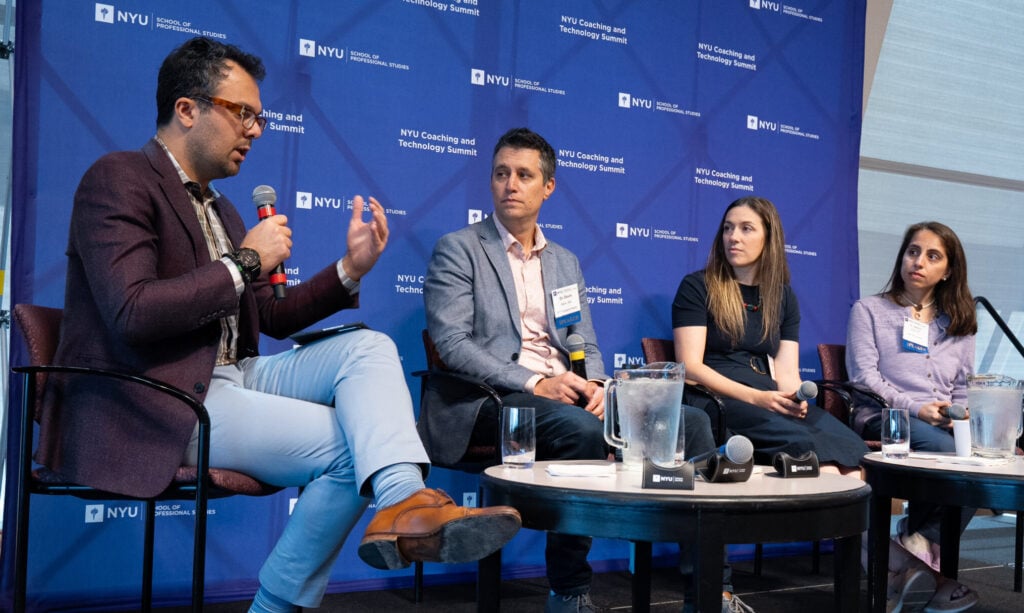
NBHWC Board Chair Moain Abu Dabrh, M.B., B.Ch., M.S., delivered a keynote exploring the intersection of coaching, healthcare, and technology. His presentation emphasized that while technology continues to evolve, meaningful human connection, professional standards, and evidence-based practice must remain at the center of health and wellness coaching.
Within the broader coaching field, Health and Wellness Coaching offers a strong example of progress in standards, credentialing, research, and practice — with much of the field-defining work led and advanced by the National Board for Health & Wellness Coaching. As HWC moves into new frontiers, the work ahead must remain grounded in research, education, practice, policy, and deliberate collaboration. We must think globally and act locally.”
“I want to extend my thanks again to everyone at the NYU Coaching & Technology Summit for creating a hospitable and meaningful forum for diverse thinking and experience — a place to listen, share, and learn.
Through the Mayo Clinic experience, I shared how when values are grounded in mission at every step, the center remains crucial — a moral compass for service and healing, where humans remain at the heart and technology serves as a tool to augment a meaningful reach and impact.
Some of the other key messages I shared focused on how AI may help scale the coaching field, but may also scale whatever we have not examined: overconfidence, marginalization, dehumanization, and burden substitution. Responsible coaching at scale is not merely a delivery opportunity; it is an opportunity to strengthen trust, evidence, standards, and meaningful human change. Yet that promise may fall short without realistic governance and safeguards — locally and globally. Healthcare delivery offers important lessons here.