Health and wellness coaching (HWC) is built on a simple but powerful premise: people are more likely to make meaningful, lasting changes when they are supported in ways that respect their lived experiences, values, and goals. As the profession continues to grow across healthcare, corporate, and community settings, a commitment to opportunity, access, respect, and belonging remains central to ensuring that HWC serves individuals and communities effectively.
The National Board for Health & Wellness Coaching (NBHWC) establishes professional standards that guide training, certification, and ethical practice in the field. These standards recognize that health behaviors are influenced not only by individual choices but also by social, environmental, and structural conditions that shape people’s opportunities to pursue health and well-being. Preparing coaches to understand these realities is essential to effective coaching practice and to the continued advancement of the profession.
Recognizing the Diversity of the Clients We Serve
Individuals seeking HWC come from a wide range of backgrounds, cultures, and life circumstances. Health behaviors and outcomes are influenced by many factors, including economic stability, education, healthcare access, neighborhood environments, and social support systems. These influences are commonly described as the Social Determinants of Health (SDOH). SDOH are the conditions in which people are born, grow, live, work, and age.
The NBHWC Content Outline prepares coaches to recognize how these determinants affect health behaviors, well-being, and medical conditions. Coaches learn to identify how factors such as access to education, economic resources, healthcare availability, and community environments may influence a client’s ability to pursue health goals.
In addition to social determinants, coaches are introduced to the concept of structural determinants of health. These broader forces, including governance, laws and policies, institutional practices, cultural norms, and power structures, shape how health resources and opportunities are distributed across communities. Structural factors can influence the quality of the social conditions individuals experience and, ultimately, their health outcomes.
Understanding these influences allows coaches to better support clients in navigating real-world challenges. Effective coaching requires meeting clients where they are and approaching each interaction with curiosity, respect, and cultural humility. Coaches are trained to remain aware of their own beliefs, assumptions, and biases and to recognize how these may influence the coaching relationship.
When clients feel heard, respected, and supported, trust grows, and that trust is essential for meaningful, sustainable behavior change.
Strengthening the Coaching Workforce
The HWC profession is strengthened when the coaching workforce reflects the diversity of the communities it serves. Coaches come from a wide range of professional backgrounds, including healthcare, public health, behavioral science, education, fitness, and community leadership. They also bring diverse personal experiences and cultural perspectives that enrich the coaching relationship.
A diverse coaching workforce can enhance the profession’s ability to engage individuals from many different communities and life experiences. When clients see coaches who understand or reflect their experiences, it can strengthen trust, communication, and engagement in the behavior change process.
Through its Board-Certification and approved training programs, NBHWC supports pathways into the profession that welcome individuals with varied backgrounds and perspectives. This diversity benefits not only clients, but also healthcare providers, employers, and public health organizations that increasingly integrate coaching into programs designed to support health and well-being.
Expanding Impact Across Practice Settings
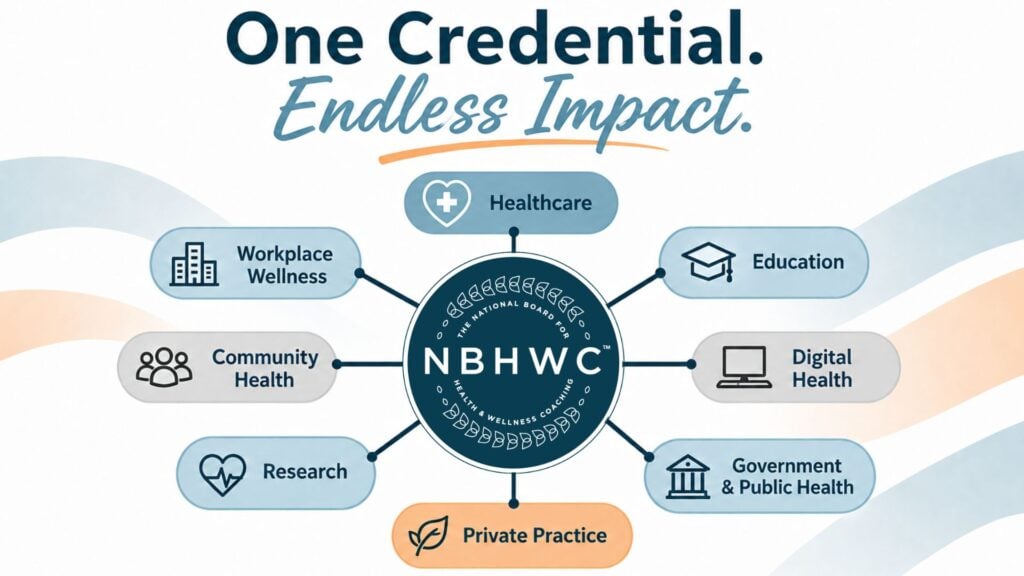
HWC is increasingly integrated across a wide range of settings, including:
- Hospitals and healthcare systems
- Community health centers and clinics
- Corporate wellness and employee wellbeing programs
- Public health initiatives
- Community-based organizations
In these environments, coaches often support individuals navigating complex health challenges influenced by social and environmental factors. Coaches help clients clarify priorities, set realistic goals, build confidence, and develop strategies for sustainable behavior change.
Research and practice models continue to demonstrate the value of coaching in supporting the prevention and management of chronic conditions such as type 2 diabetes, cardiovascular disease, and stress-related conditions. Coaching helps individuals translate medical guidance into daily life by strengthening skills such as self-awareness, motivation, and accountability.
At the center of this work is the coach–client relationship. Coaches are trained to remain attentive to their own thoughts, emotions, and beliefs while maintaining focus on the client’s priorities and goals. This level of self-awareness allows coaches to support clients without imposing judgments or assumptions, creating a safe environment for meaningful change.
Ethical Practice & Professional Standards
NBHWC Approved Training Programs develop curriculum based on the NBHWC Content Outline, which informs the Health & Wellness Coach Certifying Examination (HWCCE). This framework ensures that certified coaches possess the competencies needed to work effectively with individuals from many backgrounds and communities.
HWC is fundamentally client-centered and strengths-based. Coaches guide the process while empowering clients to identify their own motivations, resources, and solutions. This approach affirms the client’s role as the expert in their own life while creating a collaborative partnership for change.
Board-Certified coaches also follow the NBHWC Code of Ethics, which emphasizes professionalism, integrity, and respect for all individuals. Ethical practice includes maintaining client confidentiality, identifying and addressing potential conflicts of interest, and demonstrating dignity and respect in all interactions.
The Code of Ethics calls on coaches to honor diversity and practice cultural humility, recognizing the importance of understanding and respecting differences in experiences, perspectives, and cultural backgrounds.
The Role of Community & Belonging
Health and well-being are deeply influenced by social connections and community context. The NBHWC Content Outline highlights the role of community and belonging in shaping health outcomes. Human connection, acceptance, and support are essential elements of well-being.
Research shows that social isolation and loneliness are significant risk factors for poor health outcomes and increased mortality. For this reason, coaches often explore how relationships, community connections, and support networks influence a client’s ability to maintain healthy behaviors.
Recognizing the importance of belonging helps coaches support clients not only as individuals, but also as members of broader communities and social systems that influence health.
Moving the Profession Forward
As HWC continues to expand across healthcare, workplace wellness, and community health initiatives, maintaining strong professional standards will remain essential. The NBHWC Content Outline and Code of Ethics provide a framework that prepares coaches to work respectfully and effectively with individuals from many backgrounds and life circumstances.
By cultivating self-awareness, understanding the broader influences on health, and practicing professionalism and respect, board-certified health and wellness coaches help create supportive environments in which individuals can pursue meaningful improvements in their well-being.
HWC ultimately advances a vision of care that recognizes the whole person and supports opportunities for health and well-being across diverse communities.