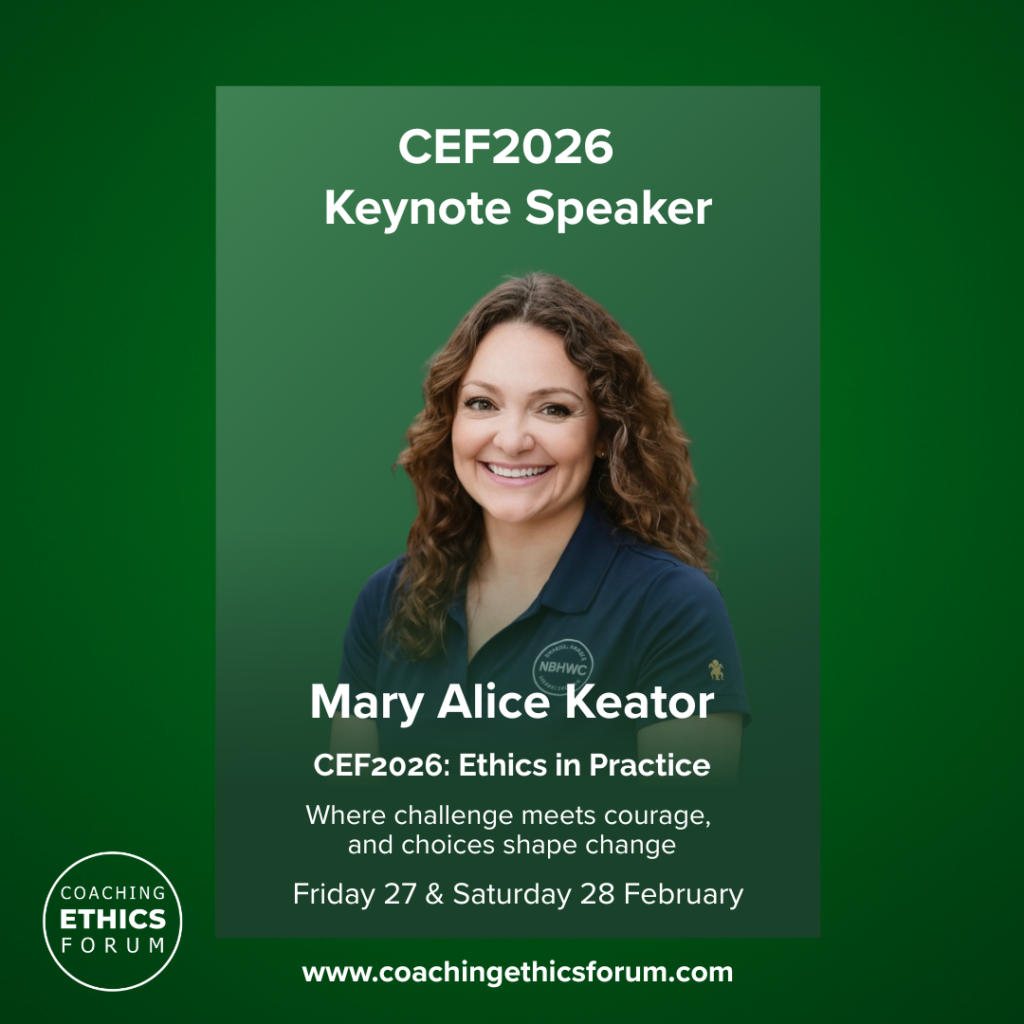
This past weekend, I had the privilege of attending and presenting at the Coaching Ethics Forum 2026. Over two days, what became increasingly clear is that ethics is not a side conversation in coaching. It is central to who we are as a profession.
CEF is not a traditional conference; it is a worldwide developmental convening space for those from various coaching disciplines. Speakers and participants did not rush toward easy answers. Instead, conversations returned to complexity, revisiting themes, extending ideas, and allowing tough questions to be examined thoughtfully.
Among the themes explored:
- Ethical fading and moral courage
- Power, governance, and systemic responsibility
- AI and humanity
- Psychedelics and the scope of practice
- Supervision as ethical containment
- Grief, instability, and ethical presence in a destabilized world
- Co-creation and relational responsibility
What stood out most was not 1:1 agreement in ethical codes, but depth. Ethics was not treated as a checklist. It was treated as a living discipline.
What NBHWC Brought to the Conversation
In my session, I offered three scenarios that compared the ethical lenses of the NBC-HWC, the International Coaching Federation (ICF), EMCC Global (formerly the European Mentoring and Coaching Council), and the International Association of Coaching (IAC).
- A client requesting guidance on tapering prescribed medication
- When a client asks about discontinuing medication, the central question is not whether lifestyle change matters. It is whether the coach remains within scope. This scenario was especially important for highlighting the unique scope of practice of NBC-HWCs, as NBHWC was the only health and wellness-focused organization present.
- A sponsored coaching engagement where HR requested confidential information
- When a sponsor organization seeks confidential information, the question is not whether they have an interest; it is whether the coaching agreement supports disclosure.
- A coach navigating personal religious conflict when working with an LGBTQ client
- When personal belief intersects with client identity, the question is not what one believes privately; it is whether professional standards of dignity, respect, and non-discrimination are upheld.
Each scenario surfaced a different ethical pressure point: scope, confidentiality, influence, bias, and accountability. What became clear in the discussion was that most ethical dilemmas are not about what we know, but are about the boundaries we are willing to hold.
Returning to our Codes reframed each discussion. Professional Conduct with Clients, Confidentiality, Professional Accountability, and Conflicts of Interest are not abstract categories. They provide structure when situations become ambiguous, and, perhaps most importantly, I was reminded that clarity of role is not limiting; it is what allows a profession to stand confidently at the intersection of care, influence, and accountability, especially when we are working alongside healthcare systems that require both compassion and rigor.
A Note to Approved Training Programs
Approved Training Programs shape how coaches reason, not just how they perform. Ethics education benefits from being woven throughout the curriculum, not confined to a single module. Scenario analysis, multi-party contracting discussions, and open conversations about bias and influence can prepare coaches for the realities they will face. Creating alumni ethics roundtables or peer dialogue spaces can also support graduates beyond certification. Ethical reasoning strengthens when discussed collectively.
An Invitation to NBC-HWCs
Ethics is not something we reference only when something goes wrong. It is something we practice proactively.
Consider:
- Revisiting the Code annually and reflecting on how your practice may be evolving.
- Strengthening your contracting language so that confidentiality and scope are clear before they are tested.
- Engaging in supervision or peer consultation when facing complexity or internal tension.
- Being mindful of influence, especially in moments when clients or sponsors elevate your authority.
Ethical drift rarely happens dramatically. It often happens subtly, under relational or institutional pressure. Staying in conversation helps prevent that drift.
Staying Current and Connected
Remaining aligned with the NBHWC Code of Ethics and Professional Practice requires intention. Review updates regularly. Participate in continuing education that engages ethical reflection. Build peer consultation groups. Network with fellow coaches and Approved Training Program leaders to explore real-world dilemmas. When we reason together, we sharpen our ethical discernment. When we examine complexity openly, we reinforce trust.
Closing Reflection
The Coaching Ethics Forum reinforced something simple yet profound: ethics is not a constraint on our work. It is the structure that allows our work to endure. As coaching continues to evolve, our collective credibility will be shaped not only by outcomes but by how we hold boundaries, manage influence, and honor our agreements. Our Code is more than a certification requirement; it is a shared commitment to disciplined practice and a foundation for trust in an increasingly complex world.
Want to Learn More?
Join us on June 2, 2026 for a presentation from JoAnn M. Eickhoff-Shemek, PhD, FACSM, FAWHP entitled “The Intersection Between the NBHWC‘s Standards of Ethical Conduct and Federal and State Laws”. This event examines how the NBHWC’s Code of Ethics and Professional Conduct aligns with federal and state laws that shape health and wellness coaching practice. For more information and to register: Click Here