As interest in whole-person health continues to grow, more individuals and organizations are turning to health and wellness coaches for support with sustainable lifestyle change. A National Board-Certified Health and Wellness Coach (NBC-HWC) represents the highest professional standard in the field, offering credibility, consistency, and evidence-based coaching practices that clients can trust. Despite this growing interest, many people have never heard of health and wellness coaching, or remain unclear about what coaches do and how they support behavior change. In this article, we outline the role of a health and wellness coach, with a deeper focus on what sets an NBC-HWC as the professional standard in the field.
What Does a Health and Wellness Coach Do?
Health and wellness coaches guide clients in discovering strategies that work for their unique lives, including nutrition, physical activity, stress management, sleep, adherence to prescribed medications, and overall well-being. The coach’s role typically includes active listening, motivational support, collaborative goal setting, and accountability structures. Rather than telling clients what to do, coaches guide them to use their strengths, discover what motivates them and identify barriers and how to address them.
NBC-HWCs are trained behavior change professionals who partner with individuals to support meaningful, lasting change. They are skilled in active listening, ask powerful questions that encourage reflective thinking and self-discovery, and foster accountability, all grounded in evidence-based coaching techniques. Unlike fitness trainers or nutrition advisors who may focus mainly on prescribed advice, coaches use a client-centered approach that supports individuals in clarifying their goals, identifying personal values, and building confidence to take action.
What Makes a Coach an “NBC-HWC”?
The title “health coach” is not regulated, meaning training and qualifications can vary widely. Anyone can call themselves a health coach or health and wellness coach, but not everyone can call themselves a National Board Certified Health and Wellness Coach. The NBC-HWC credential, issued through the National Board for Health & Wellness Coaching (NBHWC), establishes a nationally recognized standard of excellence.
To earn this credential, coaches must:
- Complete an NBHWC Approved Training Program
- Complete 50 health and wellness coaching sessions
- Have an associate’s degree or higher, in any field or have 4,000 hours of work experience, in any field
- After completing the above requirements, they must pass a rigorous national board exam developed in partnership with the National Board of Medical Examiners (NBME)
This process ensures that NBC-HWCs meet consistent standards for competence, ethics, and professional practice.
More on Why Board Certification Matters:
Why Board Certification Matters
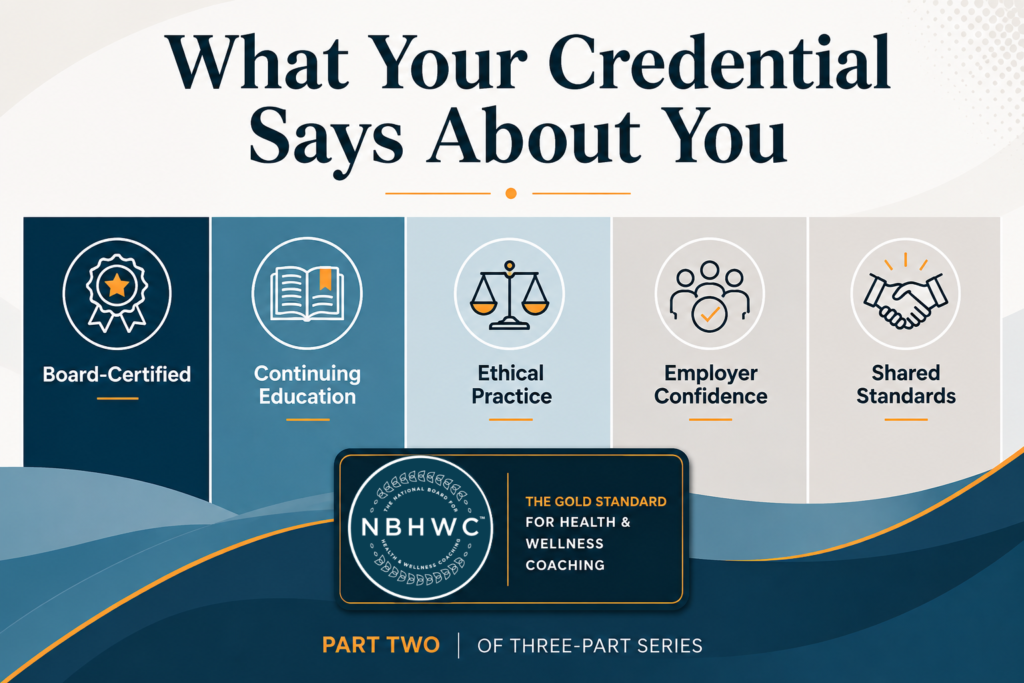
Board certification benefits both coaches and the people they serve. For clients, it offers reassurance that their coach has met clearly defined professional and ethical standards. For employers and healthcare systems, it builds confidence in hiring coaches trained in evidence-based behavior change methods.
A Credential You Can Trust
NBC-HWCs commit to ongoing continuing education and recertification requirements, ensuring their skills stay current as the field evolves. This commitment distinguishes NBC-HWCs from those without standardized training and supports the growing integration of coaching into healthcare, workplace wellness, and community health settings.
This standardized credential offers several key benefits:
- Credibility and Trust: Because NBC-HWCs meet specific knowledge, skill, and ethical standards, clients, employers, and organizations can trust in their capabilities.
- Professional Standards: The certification process ensures coaches are trained in validated competencies, ethical guidelines, and effective behavior-change frameworks.
- Increased Opportunity: NBC-HWCs often have broader access to career pathways, from corporate wellness roles to integrated healthcare teams and private practice.
What NBC-HWCs Do – and Don’t Do
A common misconception is that NBC-HWCs act as nutrition, fitness, or mental health providers, diagnose conditions, or prescribe treatments. In reality, NBC-HWCs do not provide medical, nutritional, fitness, or therapeutic care unless they hold separate, appropriate professional credentials or licenses.
Instead, NBC-HWCs work alongside clients as collaborative partners, helping them clarify their health-related priorities, explore what motivates change, and translate intentions into realistic, sustainable actions. Through evidence-based coaching techniques such as active listening, powerful questioning, and accountability, coaches help clients navigate barriers, build confidence, and strengthen self-awareness. Whether the goal is improving nutrition habits, increasing physical activity, managing stress, adhering to prescribed medications, or enhancing overall quality of life, the focus remains on empowering clients to take ownership of their choices and progress. Clients determine the direction of their journey, and NBC-HWCs help keep them focused, supported, and accountable as they work toward their goals.
By staying within a clearly defined Scope of Practice and Code of Ethics & Professional Conduct, NBC-HWCs create a safe, ethical partnership that empowers individuals to take an active role in their own well-being.
Where Do NBC-HWCs Work
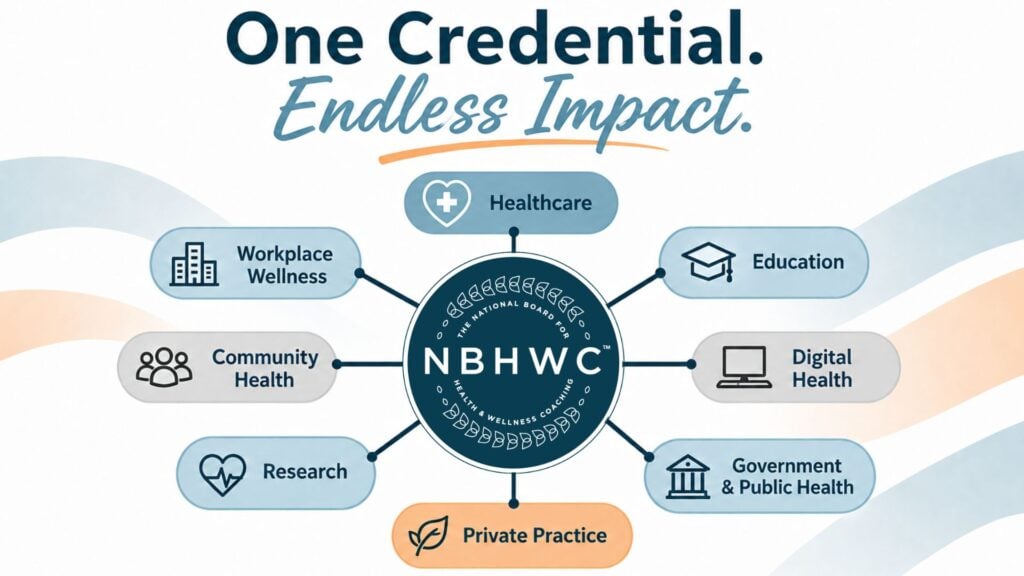
NBC-HWCs work across a wide range of settings, including:
- Healthcare and clinical teams
- Corporate and organizational wellness programs
- Digital and telehealth companies
- Schools and universities
- Fitness and wellness facilities
- Community health centers
- Private practice
Across these diverse environments, NBC-HWCs collaborate with individuals and organizations to support sustainable behavior change, enhance existing care or wellness initiatives, and help bridge the gap between knowledge and action in everyday health decisions. Coaches themselves come from a wide range of professional and lived experiences, bringing unique perspectives that strengthen their ability to meet clients where they are. This diversity allows NBC-HWCs to honor each individual’s values, culture, and circumstances, recognizing that there is no one-size-fits-all approach to well-being.
In our 2025 Annual Survey results showed that 41% (734) worked in private practice, 22% (401) worked in healthcare and 10% (174) worked in for-profit digital health.
Growing Need for NBC-HWCs
As awareness of lifestyle-related chronic conditions grows, so does the demand for professionals who can facilitate meaningful and lasting change. NBC-HWCs are uniquely positioned to fill this need because their certification tells clients that they are not just experienced; they meet nationally standardized criteria for excellence and ethical practices you can trust. They are the best of the best in the field, and they are no longer a nice-to-have but a vital part of society.